This guide is independent and contains no paid placement. If affiliate links are added later, they will be clearly marked and will not change our editorial checks.
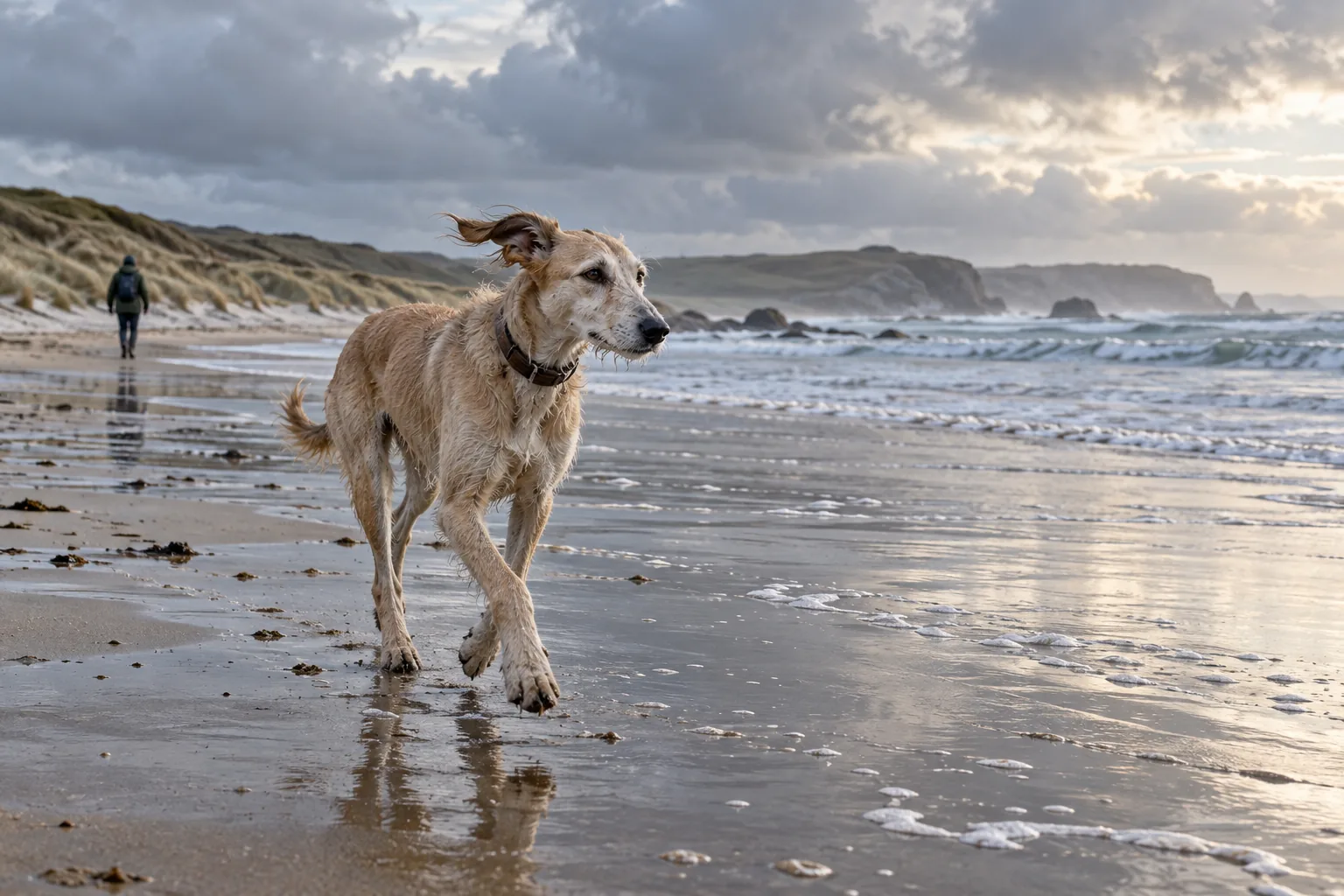
Choose the beach routine first and the park second. In Cornwall, a short distance on the map can still mean slow summer roads, while dog restrictions differ by beach, date and time.
Your dates change the beach map
Cornwall has many beaches without dog restrictions, but popular beaches can have seasonal or all-year rules. The council’s current list includes different date windows and daytime restrictions, and privately managed beaches can set their own conditions. Check the named beach for your exact dates instead of relying on a park’s general “near dog-friendly beaches” line.
Seasonal bans typically run through the summer school holidays — commonly July and August, sometimes stretching from Easter to the end of September — and often apply only during daytime hours, with dogs welcome early morning and evening. A smaller number of beaches carry all-year prohibitions, and these are the ones that catch people out, because a beach that looks empty in October may still be restricted. Public Space Protection Orders set the legal basis, so the council’s published list is the document that counts, not a park brochure or a two-year-old blog post.
The practical approach is to shortlist two or three named beaches near any park you consider, then check each one against the council list for your travel dates. Note the exact hours as well as the dates: an 8am–7pm restriction still leaves a perfectly good dawn walk. If you are travelling with a dog that needs a proper daily run, weight your choice toward beaches with year-round access rather than hoping a restricted beach will be quiet enough to risk — enforcement and local feeling both run high in peak season.
Pick one coast, not all of Cornwall
A seven-mile drive is not always a quick hop in August. For a short stay, choose a compact patch: north coast surf beaches, a quieter south-coast base, or the far west. Save a cross-county day for a longer trip. A park with an ordinary footpath from the gate can be more useful than a dramatic beach that requires loading a sandy dog into the car twice a day.
Each coast produces a different trip. The north coast offers big surf beaches and long sands that suit dogs who love to run, but also the strictest seasonal restrictions on the famous stretches and the heaviest summer traffic. The south coast is more sheltered, with village beaches and calmer water, though many coves are small and fill quickly. The far west around Penwith feels wilder and quieter, with a slower pace that suits nervous dogs — at the cost of longer drives to get there in the first place.
For a weekend or a four-night break, commit to one area and use it well. A single reliable morning circuit — beach or coast path, same parking, known toilet stops — beats a grand tour that spends half the trip in traffic. Our weekend break planner follows the same logic: one base, one routine, one backup plan.
August driving, honestly measured
Cornwall’s roads punish optimism. The A30 is the county’s spine and crawls on summer Saturdays; the A38 and A39 feed the south and north coasts respectively, and once you leave the A-roads you are on narrow lanes where a tractor, a caravan and a delivery van cannot all pass. Measure every journey that matters in minutes at the time of day you will actually travel it, using a live map — and then add a margin for parking.
Parking is the hidden second journey. Honeypot beaches can fill by late morning in August, and the walk from the overflow car park to the sand with an excited dog in heat is nobody’s idea of a holiday. Check whether your shortlisted beaches have dedicated dog-friendly parking areas or time-limited bays, and identify one beach with easy parking as your low-effort fallback for the days when everything else is full. A park within genuine walking distance of at least one beach or coast-path section removes the car from the equation entirely on the days you need it gone.
Plan arrival and departure around the traffic, not through it. Saturday changeover days are the worst; arriving Friday evening or Sunday, where the park allows, can save an hour of queuing. Keep water in the car cabin, plan a proper sniff stop away from service-station traffic on the way down, and never leave a dog in a parked car in summer — Cornish car parks in August are greenhouses.
Check what “coastal” means on the ground
Cliff paths may have livestock, steep drops or narrow gates. Beaches may be reached by long staircases. Ask about gradients, road crossings and whether the advertised walk is suitable at high tide. Older dogs often benefit from a level park perimeter and a nearby hard-surface loop when the weather closes in.
“Sea views” and “coastal location” describe the outlook, not the access. A park two fields from the cliff edge may still require a twenty-minute walk along an unpavemented road to reach the coast path, and the famous beach in the photos might sit at the bottom of 150 steps. Ask three concrete questions: how long is the walk from the unit to the nearest dog-accessible beach or path section, what is underfoot (steps, steep lane, pavement), and what happens at high tide — some beaches shrink to nothing, and the alternative may be a road walk you would not choose twice.
Livestock is part of the coastal picture. Cliff-top fields are often grazed by sheep or cattle, and the coast path passes through working farmland. A dog that is reliable off lead at home still needs a lead routine here, and the park should be able to tell you where grazing is current. For older or less mobile dogs, prioritise level ground: a flat park perimeter plus a nearby surfaced loop will get more use than a dramatic cliff walk attempted once.
Plan for wet sand, not postcard weather
Look for an outside tap, a covered entrance and somewhere to dry towels. Bring a brush for seeds and burrs, a dedicated dog towel, a washable throw and a head torch for late walks. Salt water should not be the dog’s drinking supply; carry fresh water even on a cool day.
Cornwall’s weather changes fast, and a wet dog in a small lodge is a test of everyone’s patience. The accommodation features that matter most are unglamorous: hard or washable floors rather than carpet, a boot-room or entrance porch where a damp dog can be contained, and somewhere to hang towels where they will actually dry. An outside tap or a dog-wash station near the unit turns the post-beach rinse from a chore into a two-minute job — ask whether it exists and where it is, because “facilities on site” can mean a single tap by reception.
Salt water deserves respect. Dogs that swim or mouth seawater can take in enough salt to cause vomiting and dehydration, so rinse the dog after sea swims and offer fresh water before and after the beach. Wet sand also hides hazards: fishing line, broken shells and the occasional fish hook near working harbours. A quick paw check after every beach walk becomes second nature within days.
The Cornwall dog kit
Pack for the coast you will actually meet, not the brochure version. A long line (5–10 metres) is the single most useful item: it gives a dog freedom on cliff paths, near livestock and on busy beaches while keeping you legal and in control. Add a dedicated dog towel that lives by the door, a brush or comb for seeds and burrs picked up on coast-path verges, and a tick remover — ticks are common in coastal grassland and dunes.
Water and shade round out the essentials: a collapsible bowl and a bottle of fresh water for every outing, plus something to create shade if your unit’s outdoor space faces the sun at midday. Poo bags in greater quantity than you think necessary — rural bins can be sparse, so be prepared to carry. A head torch earns its place for late toilet walks on unlit park roads, and a washable throw protects both car seats and lodge sofas. If your dog swims, a well-fitting buoyancy aid is worth considering for harbour and estuary water where currents surprise people.
The five-minute verification routine
Three days before travel, recheck the council beach page, tide times and the park’s latest pet rules. Save screenshots because rural signal can be patchy. Put two unrestricted or out-of-hours alternatives in your notes so a changed sign or crowded car park does not derail the day.
Make the routine a checklist and run it in order. First, the council’s dogs-on-beaches page for each beach you plan to use — restrictions change between seasons and occasionally mid-season. Second, tide times for your beach days: a beach that is glorious at low tide can be a narrow strip at high tide, and some coves cut off entirely. Third, the park’s pet policy as currently published, with a screenshot saved to your phone. Fourth, your route and parking for day one. The whole exercise takes five minutes with a signal and saves the particular misery of arriving at a beach, dog quivering with excitement, to find a new restriction sign.
Booking checks that matter here
Cornwall’s popularity makes its booking mechanics less forgiving than quieter counties. School-holiday weeks at well-located parks can sell out six to nine months ahead, and the dog-friendly units — often a subset of the total stock — go first. If your dates are fixed, book early; if your dates are flexible, the shoulder seasons of May, September and October buy you calmer roads, open beaches and lower prices in one move.
Apply the general UK holiday park booking checks with Cornish emphasis: confirm the per-dog charge and the maximum number of dogs for your specific unit, ask which outdoor space comes with it and how it is bounded, and get the after-dark toilet walk described. Arrival times typically run 3–4pm with 10am departures; on a Saturday changeover in August, arriving at the start of the window beats sitting in the A30 queue and then in the reception queue. Finally, ask about the park’s own dog exercise area — on a wet Cornish day when the beach is a horizontal-rain experience, a sheltered on-site field can save the trip.
Practical questions
Before you go
Are Cornwall beaches dog-friendly all year?
Some are, but others have daytime seasonal restrictions — typically through the summer — or an all-year prohibition. Restrictions are set beach by beach under Public Space Protection Orders, so always check Cornwall Council’s current list for your exact dates rather than relying on a park’s general claim.
Is it better to stay right beside a beach?
Only if the access and rules suit your dates. A famous beach at the bottom of steep steps, or one with a summer dog ban, is less useful than a park slightly inland with a safe walk from the gate. Weigh the walk’s gradient, parking and high-tide behaviour before paying for the sea view.
How bad is the driving in Cornwall in August?
Slow enough to plan around. The A30 crawls on summer changeover days, lanes clog near honeypot beaches, and parking can fill by late morning. Measure journeys in minutes at the time you will travel, arrive in daylight, and keep at least one walk that needs no car at all.
Should I worry about ticks and adders on the coast path?
Ticks are the routine hazard — check ears, armpits and groin after walks through coastal grass and dunes, and carry a tick remover. Adders are present but rarely encountered; keep dogs out of dense bracken in warm weather. Talk to your vet about tick prevention before the trip.
Can dogs walk the South West Coast Path off lead?
Not as a default. The path crosses farmland with sheep and cattle, passes cliff sections with unfenced drops, and runs through ground-nesting bird areas in spring and summer. Use a lead or long line on narrow or exposed sections, and follow local signage.